19:02 Taiga |
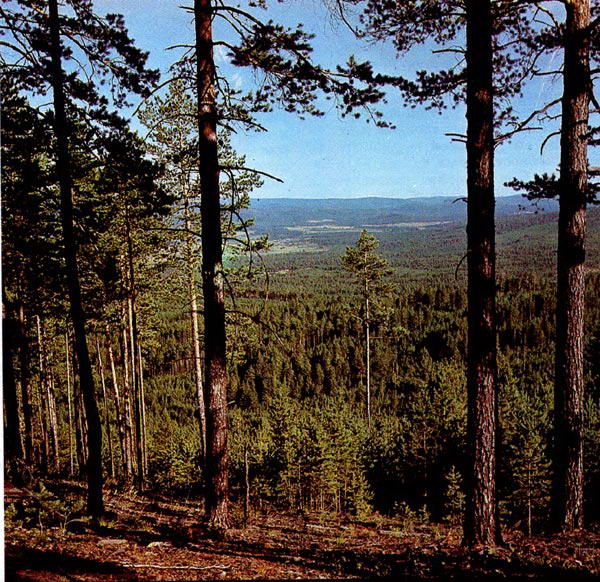 Taiga - it's more or less dense in its natural state, usually inaccessible, pine thickets of the swampy soil with a windfall and vetrovalom. The northern boundary of the taiga coincides with the northern boundary of forests. The southern boundary runs in the European part of Russia from the Gulf of Finland in the north-east to the Urals, it bends around to the south and continue the same, in Siberia, the steppes to the northern boundary of the river Ob. East of the mountain taiga grabs space from the Altai to the Amur and Ussuri region. Quoting cevepo-east of Siberia has forests. In Kamchatka taiga occupies two small islands north of Petropavlovsk. The principal tree species of the taiga: spruce, European and Siberian pine, larch, fir, and cedar. In Siberia, the same breed, with the exception of the European spruce. In eastern Siberia, larch dominates, and high on the mountain cedar slate. In the taiga, the Far East, new pine: fir, spruce Sayan, Manchurian pine, and on Sakhalin Island - yew. In the taiga of European Russia moves to the south in coniferous forests with an admixture of krupnolistvennyh species (oak and others) that are absent in the whole of Siberia, but reappear on the Amur. In the taiga are only hardwood birch, aspen, rowan, wild cherry, alder and willow. From krupnolistvennyh species in the forest comes only lime, and only in the European taiga and sometimes - in Western Siberia to the Yenisei River. Quite a large island lime is in the Altai, on the western slope of the Kuznetsk Alatau. More recently (mid 90s of the XIX century) and the taiga of Siberia Urman space were completely investigated and considered unfit for habitation, and in particular for agricultural colonization. It was assumed that the taiga and Urman are more or less entirely of mountainous or swampy spaces covered with primeval forest. It was believed that these lands are inconvenient for agriculture as on soil and climatic conditions (extreme severity of the climate, the excess moisture), and on the difficulties of clearing forests for land. Does sometimes attempt to drain land for settlement on the outskirts of the taiga are almost always ended in failure: either the sites are not populated, or dwell on them immigrants shifted to more convenient locations. When asked about the settlement of the taiga spaces was drawn serious attention only in 1893 - 1895's, when all arrangements for settlement of Siberia were delivered more widely. It was found impossible to ignore such a huge tracts of land, which represents the taiga. Soil conditions in many parts of the taiga are sufficiently favorable for agriculture. Such obstacles as excess moisture and harsh climate, largely eliminated under the influence of population and culture. Because of this, in many boreal regions have been discovered of Education resettlement sites, which gave very satisfactory results in general 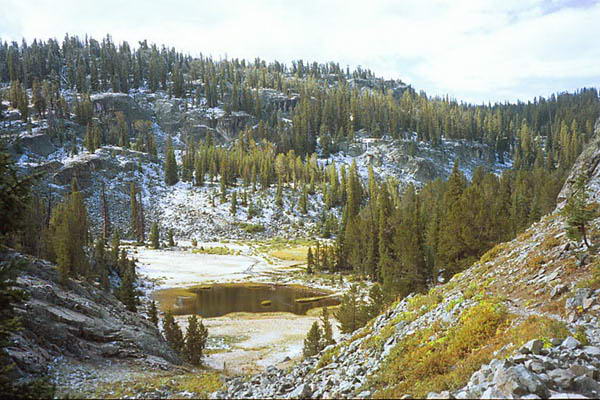
|
|
|
| Всего комментариев: 0 | |